


As the world accelerates its transition toward low-carbon economies, Malaysia is strategically positioning itself to harness the power of renewable energy (RE). With abundant natural resources and a well-established energy infrastructure, the country has both the potential and urgency to diversify its energy mix in favor of sustainable sources. Driven by national policy, private investment, and regional cooperation, Malaysia’s renewable energy sector is poised for transformative growth.
An Overview of Key Renewable Energy Sources
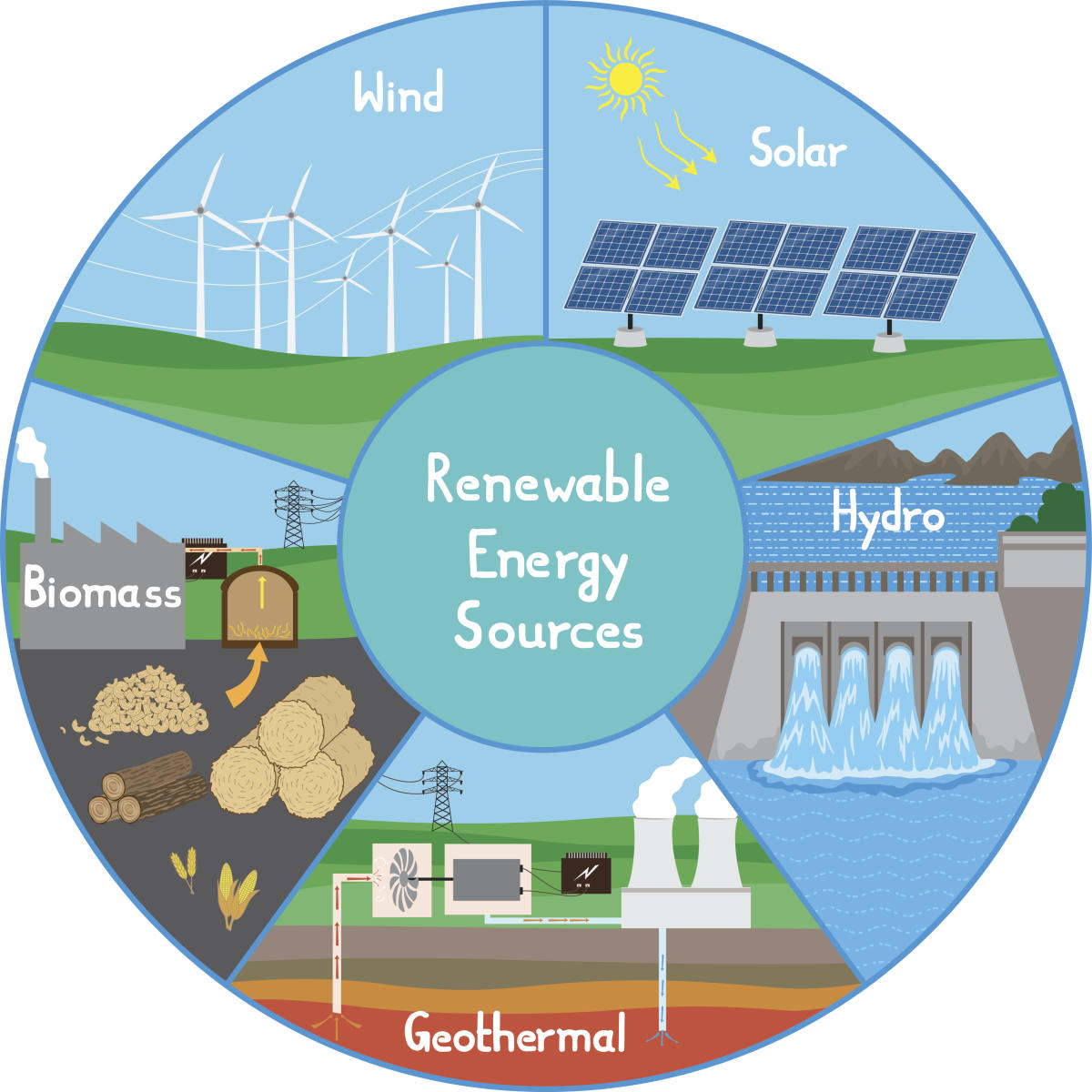
Solar Energy: Leading the Charge
Malaysia’s equatorial location offers consistent solar irradiance (4.21–5.56 kWh/m²/day), making solar the country’s most promising renewable energy source.
-
Large Scale Solar (LSS) initiatives, launched in 2016 and expanded through LSS1 to LSS4, have drawn both local and international investment.
-
Net Energy Metering (NEM) allows residential, commercial, and industrial users to export excess power back to the grid.
-
Self-Consumption (SELCO) models are increasingly popular, particularly in high-demand sectors like manufacturing and education.
Hydropower: The Traditional Backbone
Hydropower contributes significantly to Malaysia’s installed renewable energy capacity, especially in East Malaysia.
-
Large dams, like Bakun and Murum in Sarawak, supply stable baseload power.
-
Mini and micro-hydro systems support rural electrification in Sabah and Sarawak, where grid access is still limited.
Biomass and Biogas: Waste as a Resource
Malaysia’s large palm oil and agricultural sectors generate substantial organic waste, ideal for energy use.
-
Biomass is commonly used in co-generation systems at mills and factories.
-
Biogas systems, often at palm oil mills and livestock farms, convert methane into electricity while cutting greenhouse gas emissions.
Wind and Waste-to-Energy: Emerging Frontiers
Although wind energy remains limited due to low wind speeds in Peninsular Malaysia, pilot projects are underway in coastal Terengganu and Sabah. Meanwhile, waste-to-energy (WTE) is gaining momentum, with a flagship facility in Seberang Perai, Penang, and more projects in the pipeline.
Policy Framework and National Targets
Malaysia’s Renewable Energy Strategy
Malaysia’s renewable energy (RE) strategy is guided by a cohesive framework of national policies and institutional mandates.
Key Policy Instruments
-
Malaysia Renewable Energy Roadmap (MyRER 2023–2050): Targets 31% RE capacity by 2025 and 40% by 2035.
-
National Energy Transition Roadmap (NETR): Launched in 2023, it outlines a multisectoral decarbonization strategy, with a focus on hydrogen, grid modernization, and energy efficiency.
-
Policy Mechanisms: Feed-in Tariff (FiT) schemes, though now scaled down, laid the foundation for early RE growth. Currently, competitive auctions and Net Energy Metering (NEM) are the main drivers.
Institutional Anchors
-
Sustainable Energy Development Authority (SEDA)
-
Energy Commission (Suruhanjaya Tenaga)
-
Tenaga Nasional Berhad (TNB): The national utility, central to grid upgrades and RE integration.
Sectoral Deployment: Urban to Rural
| Sector | RE Applications |
|---|---|
| Urban Areas | Rooftop solar PV, building-integrated PV, Net Energy Metering |
| Industrial Zones | Solar PV with storage, biomass co-generation |
| Rural Communities | Mini-hydro, hybrid solar-diesel microgrids, community solar |
Challenges to Address
Nonetheless, Malaysia’s energy transition still faces several structural and technical barriers despite notable progress.
First, grid limitations in East Malaysia—such as aging infrastructure and limited connectivity—restrict large-scale renewable energy (RE) deployment.
Second, investment and financing gaps remain a challenge. High capital costs, especially for SMEs due to limited broader participation in the RE market.
Third, regulatory delays will poses obstacles. Lengthy licensing and Power Purchase Agreement (PPA) processes often discourage potential investors.
Finally, intermittency along with storage issues persist. Solar and wind energy need complementary investments in battery energy storage systems (BESS) and smart grids to ensure reliability.
Opportunities on the Horizon
Green Hydrogen
Sarawak is spearheading Malaysia’s green hydrogen agenda with pilot projects already underway. Given the state’s hydropower capacity, green hydrogen could position Malaysia as a future regional exporter.
Energy Storage and Digital Grids
Grid modernization initiatives and utility-scale BESS pilots are expected to support RE integration and stabilize energy supply across fluctuating sources.
ASEAN Power Grid
Malaysia, in turn, can benefit from regional energy trade through the ASEAN Power Grid by enabling cross-border renewable energy sharing and strengthening energy security across Southeast Asia.
Conclusion: A Nation at an Inflection Point
Malaysia’s shift toward renewable energy is gaining momentum, supported by practical policies, rich resources, and a favorable investment climate. To move faster, Malaysia will need continued reforms, infrastructure upgrades, and strong stakeholder collaboration. With the right investments and governance, Malaysia can become a regional leader in sustainable energy and climate resilience.
